
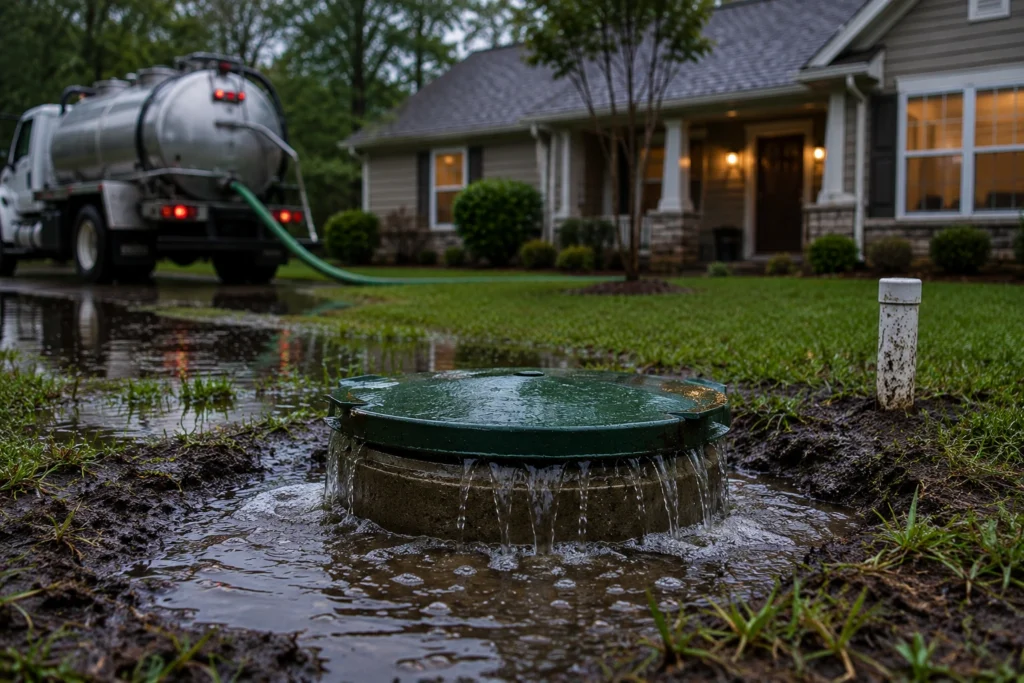
If you’re wondering whether you need emergency septic service, the answer depends on what’s happening with your system. You should call for emergency septic service if sewage is backing up into your home, wastewater is surfacing in your yard, your septic tank is overflowing, or your plumbing suddenly stops draining properly. Acting quickly can help minimize property damage, reduce health risks, and prevent more expensive repairs. While not every septic issue is an emergency, knowing when to seek immediate help can save you time, money, and unnecessary stress.
What Qualifies as a Septic Emergency?
Some septic problems can wait a day or two for a scheduled appointment, while others require immediate attention.
Situations that typically qualify as a septic emergency include:
- Sewage backing up into sinks, tubs, or toilets
- An overflowing septic tank
- Standing wastewater around your drain field
- Multiple drains throughout the house stopping at once
- Strong sewage odors combined with drainage problems
- Any situation that creates a potential health or environmental hazard
If you’re dealing with any of these issues, it’s best to get immediate help before the problem gets worse rather than hoping it resolves on its own.
7 Signs You Need Emergency Septic Service
Sewage Backing Up Into Your Home
A sewage backup emergency is one of the clearest signs you should call immediately. Wastewater inside your home can expose your family to harmful bacteria and create significant cleanup costs.
Stop using all plumbing fixtures and contact a septic professional as soon as possible.
Your Septic Tank Is Overflowing
If wastewater is pooling around your septic tank, the system may have reached capacity or developed a blockage. An overflowing tank can damage your yard and increase the risk of contamination.
Standing Wastewater in the Yard
After a storm, it’s normal to see rainwater in low spots. However, standing wastewater near the drain field often signals a septic problem.
If the water has a sewage odor or appears near your drain field during dry weather, it’s time to have the system inspected.
Multiple Drains Have Stopped Working
A single slow drain may simply be a clogged fixture. But when several drains stop working at the same time, your septic system backing up could indicate a blockage or full tank affecting the entire plumbing system.
Strong Sewage Odors Around Your Home
Persistent sewage odors inside or outside your home should never be ignored. They may point to a leaking tank, drain field issues, damaged pipes, or other problems that require professional diagnosis.
Toilets and Drains Back Up After Heavy Rain
Heavy rainfall can saturate Georgia’s clay soils and reduce your drain field’s ability to absorb wastewater. If plumbing problems appear after storms, it helps to understand how Georgia’s rainy weather can affect your septic system before assuming the problem is inside your home.
Your Septic Alarm Is Activated
Some septic systems include high-water alarms that alert homeowners when water levels become too high.
If your alarm sounds, don’t ignore it. While it doesn’t always mean major damage has occurred, it does indicate that the system needs prompt attention before conditions worsen.
What Should You Do Before Help Arrives?
If you’re waiting for an emergency technician, taking a few simple precautions can help prevent additional damage.
- Stop using water immediately.
- Keep family members and pets away from affected areas.
- Avoid opening the septic tank yourself.
- Stay away from any sewage or wastewater.
- Document visible damage if you need records for insurance purposes.
These steps help protect your property while allowing technicians to safely assess the situation.
What Causes Septic Emergencies?
Most septic emergencies develop because of one or more underlying problems.
Common causes include:
- Overdue septic pumping
- Blocked or damaged pipes
- Drain field failure
- Tree root intrusion
- Heavy rainfall and saturated soil
- Aging septic systems
- Flushing wipes, grease, and other non-biodegradable materials
In many cases, emergencies could have been prevented through routine maintenance.
Can You Prevent Septic Emergencies?
While no septic system is completely immune to problems, preventative care greatly reduces the likelihood of an emergency.
Helpful maintenance practices include:
- Removing accumulated sludge before it creates bigger problems
- Following a regular maintenance schedule instead of waiting for warning signs
- Having your entire septic system professionally evaluated every few years
- Conserving household water usage
- Avoiding grease, wipes, and other harmful materials
- Protecting your drain field from vehicle traffic and heavy equipment
If you’re unsure when your system was last serviced, reviewing the recommended pumping schedule for Georgia homeowners is an excellent place to start.
Emergency Repair vs. Routine Service
Not every septic issue requires an emergency response.
Routine service typically includes scheduled pumping, maintenance inspections, and addressing minor performance concerns before they become larger issues.
Emergency service, on the other hand, is appropriate when sewage enters the home, wastewater surfaces in the yard, the septic tank overflows, or your plumbing system stops functioning altogether.
If the problem involves damaged components, delaying service can allow the issue to spread. In these situations, repairing damaged septic components before they fail completely is often the most cost-effective solution.
Why Fast Action Can Save Thousands
Responding quickly to a septic emergency isn’t about creating unnecessary urgency—it’s about preventing avoidable damage.
Addressing problems early may help:
- Reduce repair costs
- Protect your drain field
- Prevent damage to landscaping
- Minimize contamination around your property
- Restore your plumbing sooner
The longer wastewater remains where it shouldn’t, the greater the likelihood that repairs become more extensive.
How Much Does Emergency Septic Service Cost?
The cost of emergency septic repair or emergency septic pumping depends on several factors, including:
- Whether pumping or repairs are needed
- The severity of the problem
- Accessibility of the septic system
- Whether service is needed after normal business hours
Because every situation is different, a professional inspection is the best way to determine what work is required and provide an accurate estimate.
Emergency Septic Service FAQs
What qualifies as a septic emergency?
Sewage backing up into your home, an overflowing septic tank, standing wastewater, or a complete plumbing backup all require prompt professional attention.
Should I stop using water if my septic backs up?
Yes. Continuing to use sinks, toilets, or appliances can make the backup worse.
Can heavy rain cause septic emergencies?
Yes. Saturated drain fields and rising groundwater can temporarily overwhelm some septic systems.
Is standing water over my drain field dangerous?
Standing wastewater may contain contaminants and should be avoided until the system has been inspected.
How quickly should I call a septic company?
If sewage is entering your home, your tank is overflowing, or wastewater is surfacing outdoors, call immediately.
Will my homeowners insurance cover septic damage?
Coverage depends on your individual policy. Contact your insurance provider for details.
Can I fix an overflowing septic tank myself?
No. Opening or attempting to repair a septic tank yourself can be dangerous and should be left to trained professionals.
How can I prevent future septic emergencies?
Routine pumping, inspections, responsible water use, and recognizing early warning signs that your septic tank is filling up can help prevent many emergencies.
Need Emergency Septic Service?
A septic emergency can happen without much warning, but getting professional help quickly can prevent a small problem from becoming a much larger one.
Whether you’re dealing with a sewage backup, an overflowing septic tank, standing wastewater, or a plumbing system that has suddenly stopped working, Advance Septic Solutions is ready to help. We proudly provide fast, dependable service throughout our Conyers service area as well as Douglasville, Newnan, Eatonton, Griffin, Greensboro, and nearby Georgia communities. Give us a call today for a free estimate, and we’ll help get your septic system back to working properly.