
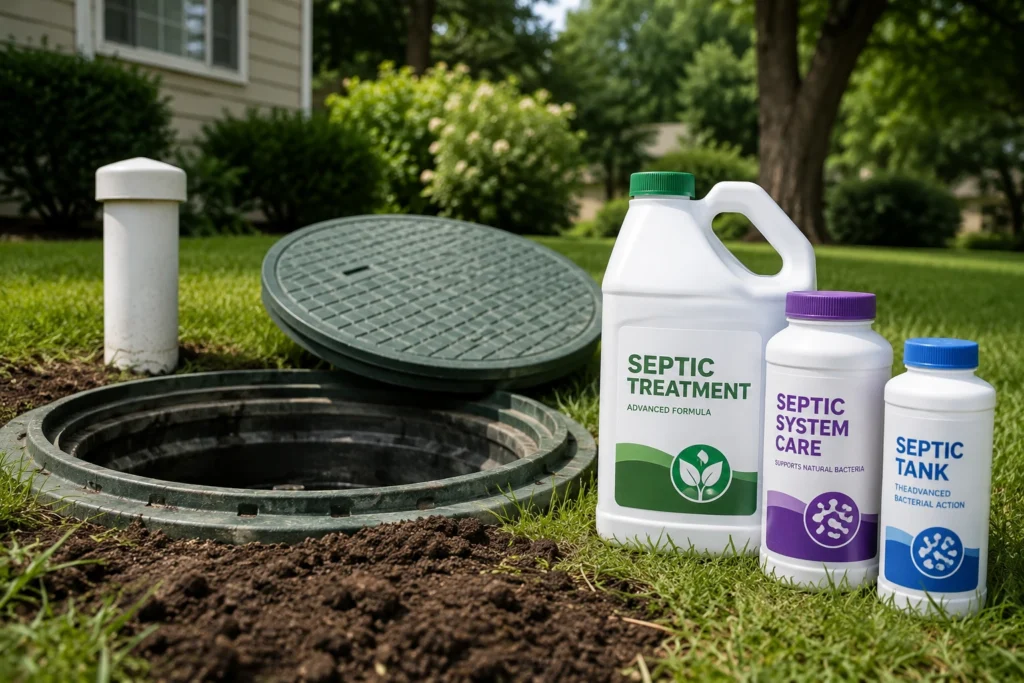
If you’ve ever wondered, do septic additives work, the short answer is yes—but only in certain situations. Septic additives may help maintain bacterial activity in some systems, but they cannot replace regular pumping, inspections, or proper maintenance. Most healthy septic systems already contain the bacteria needed to break down waste naturally, and no additive can fix a full septic tank, a failing drain field, or damaged components. Understanding what septic additives can and can’t do can help you make better decisions for your home’s septic system and avoid spending money on products that may not solve the real problem.
What Are Septic Additives?
Septic additives are products marketed to improve the performance of a septic system. They generally fall into two categories.
Biological Additives
Biological additives contain bacteria, enzymes, or other naturally occurring microorganisms. These septic bacteria additives are designed to supplement the bacteria already living inside your septic tank, helping break down organic waste.
In a properly functioning septic system, naturally occurring bacteria are usually more than capable of handling everyday household waste. However, biological additives may provide limited benefits after events that temporarily reduce bacterial activity, such as prolonged use of strong antibacterial cleaners or reopening a vacation home that has been vacant for several months.
Chemical Additives
Chemical additives often contain acids, solvents, or other harsh compounds intended to dissolve grease or reduce buildup. While some products make impressive marketing claims, certain chemical additives can disrupt the natural biological process inside your septic tank or even damage system components. Before using any chemical septic tank treatment, it’s important to follow manufacturer recommendations and consult a professional if you’re unsure.
Do Septic Additives Actually Work?
Many homeowners ask, are septic additives worth it? The answer depends on your system’s condition.
Biological additives may offer limited benefits in specific situations where bacterial populations have been reduced. They can also be appropriate if recommended by your septic system manufacturer.
However, additives will not solve problems caused by:
- A full septic tank
- A failing drain field
- Broken or collapsed pipes
- Structural damage
- Years of neglected maintenance
In these situations, professional service—not additional products—is the real solution.
Can Septic Additives Replace Pumping?
No. This is one of the biggest misconceptions about septic additives vs pumping.
Even if bacteria efficiently break down waste, solid materials continue to accumulate as sludge inside the tank. Over time, this buildup must be removed through septic tank pumping. No additive can eliminate sludge completely or prevent your tank from eventually filling.
Skipping scheduled pumping because you’re using additives can actually increase the risk of backups, drain field damage, and expensive repairs.
What Really Keeps a Septic System Healthy?
The best long-term strategy isn’t relying on products—it’s following good maintenance habits.
- Schedule regular septic maintenance.
- Have your system professionally inspected every few years with a septic inspection.
- Pump the septic tank according to your household’s size and usage.
- Avoid flushing wipes, feminine products, paper towels, or other non-biodegradable items.
- Never pour grease, cooking oils, or harsh chemicals down your drains.
- Conserve water to prevent overloading the system.
- Protect your drain field from heavy vehicles and deep-rooted trees.
Simple preventative care is far more effective than any bottle of septic system additives.
Common Myths About Septic Additives
“I Never Need to Pump My Tank”
False. Every septic tank eventually accumulates solids that bacteria cannot fully eliminate. Pumping remains an essential part of septic ownership.
“More Bacteria Means Better Performance”
Not necessarily. Healthy septic systems naturally maintain the bacterial populations they need. Adding more bacteria doesn’t automatically improve performance if the system is already functioning properly.
“Additives Can Fix Drain Field Problems”
Drain field failures are usually caused by soil saturation, clogging, or physical damage. These issues often require professional diagnosis and, in some cases, septic system repair [Septic System Repair].
“Every Septic System Needs Monthly Treatments”
Some systems may benefit from additives under specific circumstances, but routine monthly treatments aren’t necessary for every home. Following your system manufacturer’s recommendations and maintaining a regular service schedule is generally the better approach.
When Might Septic Additives Be Helpful?
Although they aren’t a cure-all, do septic tank treatments work in some situations? They can.
Examples include:
- Reopening a seasonal or vacation home after a long period of inactivity.
- Restoring bacterial balance after extended use of certain antibacterial products.
- Following manufacturer recommendations for specific septic systems.
Outside of these situations, most healthy systems don’t require routine additive use.
Signs Your Septic System Needs Professional Service Instead
If you’re experiencing any of these symptoms, the problem likely goes beyond needing additives:
- Slow drains throughout the house
- Sewage odors indoors or outdoors
- Standing water near the drain field
- Toilets or drains backing up
- Gurgling sounds in your plumbing
- Recurring drainage issues
These symptoms often indicate maintenance or repair needs rather than a lack of bacteria. Learning the signs your septic tank is full [Signs Your Septic Tank Is Full] can also help you recognize when it’s time to schedule service before a minor issue becomes a major one.
Georgia Weather Still Matters More Than Additives
Here in Georgia, environmental conditions often have a greater impact on your septic system than any additive you pour into the tank.
Heavy rainfall can saturate drain fields, while Georgia’s clay soils naturally drain more slowly than sandy soils. After extended wet weather, your system may process wastewater less efficiently even if the tank itself is functioning normally.
If you’ve noticed problems after a storm, it’s worth learning can heavy rain affect your septic system before assuming additives are the answer.
Whether you live in Conyers, Douglasville, Newnan, Eatonton, Griffin, or Greensboro, regular maintenance is far more effective than relying on treatments alone.
Are Septic Additives Worth the Cost?
For most homeowners, investing in preventative maintenance offers better long-term value than regularly purchasing additives.
Routine pumping and inspections help identify developing issues before they become costly repairs. While additives may have limited uses in certain situations, they shouldn’t replace scheduled maintenance or be viewed as insurance against septic problems.
If you’re unsure whether your system needs pumping, an inspection, or simply better maintenance habits, professional guidance is often the most cost-effective solution.
Septic Additive FAQs
Do septic additives really work?
Some biological additives may provide limited benefits under specific circumstances, but they cannot replace regular pumping or repair damaged septic systems.
Can septic additives replace pumping?
No. Sludge continues to accumulate inside every septic tank, making routine pumping necessary.
Are septic bacteria additives safe?
Many biological additives are considered safe when used as directed, but they’re generally unnecessary for healthy, properly functioning septic systems.
Can additives repair a failing septic system?
No. Structural failures, damaged drain fields, and broken pipes require professional repair.
How often should I pump my septic tank?
The answer depends on household size, tank capacity, and water usage. You can learn more in our guide on how often should you pump a septic tank in Georgia.
Will additives eliminate odors?
Not usually. Persistent odors often indicate an underlying maintenance or repair issue rather than a lack of bacteria.
Are chemical additives bad for septic systems?
Some chemical additives can interfere with the natural treatment process or damage system components. Always use products carefully and follow manufacturer recommendations.
What is the best way to maintain a septic system?
Regular pumping, routine inspections, responsible water use, proper waste disposal, and protecting your drain field remain the most reliable ways to maximize your septic system’s lifespan.
Keep Your Septic System Working Properly
While septic additives may have a place in certain situations, they’re not a substitute for professional care. The most reliable way to protect your investment is through regular pumping, inspections, and preventative maintenance.
If your septic system is showing signs of trouble or you’re unsure whether it needs service, Advance Septic Solutions is here to help. Our experienced team provides honest recommendations, thorough inspections, and dependable septic services throughout Conyers, Covington, and the surrounding Georgia communities. Give us a call today for a free estimate, and we’ll help keep your septic system working the way it should.