
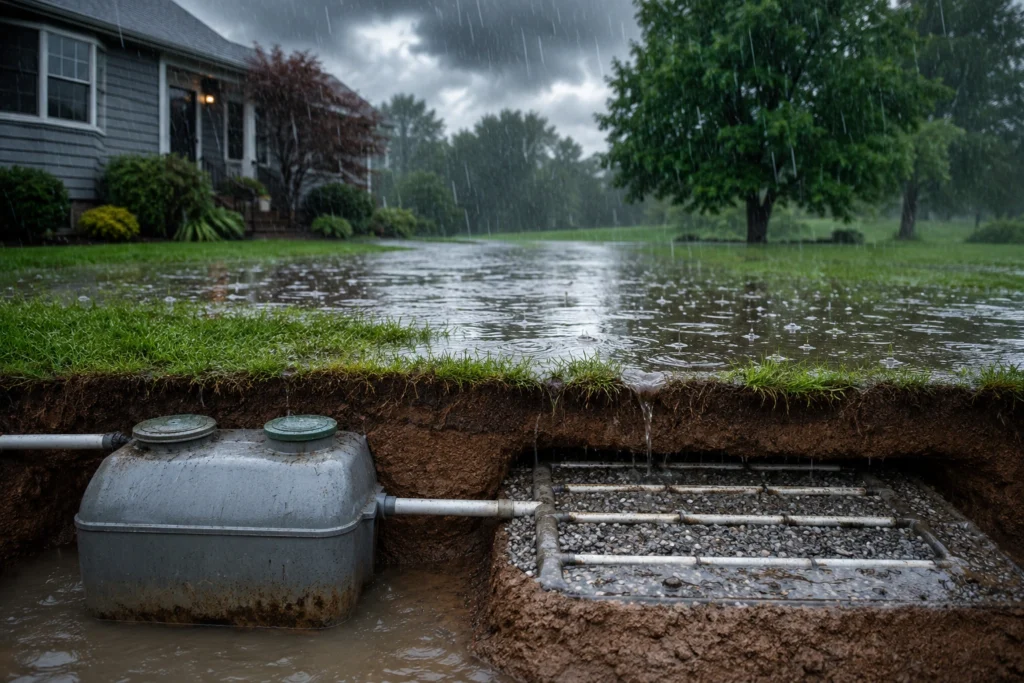
Yes, heavy rain can affect your septic system. Excessive rainfall can saturate the soil around your drain field, making it harder for wastewater to properly filter into the ground. This can lead to slow drains, sewage odors, standing water, and even septic backups.
For Georgia homeowners, this is a common concern after periods of heavy rainfall, thunderstorms, or severe weather. If you’ve noticed your toilets draining slowly, standing water in the yard, or a septic tank backing up after rain, your system may be struggling to handle the excess moisture. Understanding the connection between heavy rain and septic systems can help you prevent costly repairs and know when it’s time to call a professional.
How a Septic System Works
Before discussing heavy rain and septic systems, it helps to understand how your septic system normally functions.
A septic system is designed to collect and treat wastewater from your home. Everything that goes down your drains, toilets, showers, and sinks flows into the septic tank.
Inside the tank, solid waste settles to the bottom while oils and grease float to the top. The partially treated wastewater then flows into the drain field, where it slowly filters through the soil. The soil acts as a natural treatment system, removing contaminants before the water returns to the groundwater supply.
For this process to work properly, the soil around the drain field must be able to absorb wastewater efficiently. When heavy rain saturates that soil, problems can begin.
Why Heavy Rain Can Cause Septic Problems
Saturated Drain Fields
One of the most common causes of septic problems after heavy rain is a saturated drain field.
When the ground becomes soaked, there is little room left for wastewater to disperse. Instead of filtering through the soil as intended, wastewater may back up into the system.
This can result in:
- Slow drains throughout the house
- Gurgling sounds in plumbing fixtures
- Sewage odors indoors or outdoors
- Wastewater backing up into sinks, tubs, or toilets
A drain field flooded after rain is one of the clearest signs that your system is under stress.
Rising Groundwater Levels
Heavy rainfall often causes groundwater levels to rise.
As groundwater moves closer to the surface, it creates additional pressure around septic tanks and drain fields. This excess moisture can reduce the system’s ability to process wastewater efficiently.
In some situations, groundwater may infiltrate damaged pipes or older septic components, creating even more strain on the system.
Flooded Septic Components
During severe storms, multiple parts of a septic system can become flooded, including:
- Distribution boxes
- Drain field trenches
- Connecting pipes
- Inspection ports
Flooded components can interfere with the normal movement of wastewater and increase the likelihood of backups.
Increased Pressure on Older Systems
Aging septic systems are often more vulnerable during periods of heavy rain.
Small issues that may go unnoticed during dry weather can quickly become major problems when the ground becomes saturated. Cracked pipes, damaged drain fields, and neglected maintenance often reveal themselves after storms.
In many cases, rain doesn’t create the problem—it simply exposes existing weaknesses in the system.
Signs Heavy Rain Is Affecting Your Septic System
Wondering if rain is affecting your septic tank? Watch for these common warning signs:
- Slow drains throughout the house
- Gurgling pipes or toilets
- Sewage odors inside or outside
- Standing water near the drain field
- Soggy areas in the yard
- Toilets draining slowly
- Septic tank backing up after rain
- Wet spots that appear after storms
- Unusually green grass above the drain field
- Wastewater surfacing in the yard
If you notice any of these symptoms, it’s important to act quickly before a minor issue turns into a major repair.
What To Do If Your Septic System Backs Up After Heavy Rain
Step 1: Reduce Water Usage Immediately
The first thing you should do is limit water use inside your home. Every gallon sent into the system adds additional pressure.
Step 2: Avoid Excessive Laundry or Dishwasher Use
Hold off on running multiple loads of laundry, dishwashers, or long showers until conditions improve.
Step 3: Stay Away from Standing Wastewater
If wastewater is pooling in your yard, avoid direct contact. Sewage can contain harmful bacteria and contaminants.
Step 4: Contact a Septic Professional
If symptoms persist after the rain has stopped, it may be time to schedule a professional inspection. A technician can determine whether the issue is temporary saturation or a more serious problem requiring septic system repair.
Can Heavy Rain Cause Septic Tank Overflow?
Many homeowners ask whether a septic tank overflowing after rain means the tank itself is full.
In reality, the septic tank is often not the primary issue.
Most overflow situations occur because the drain field becomes saturated and can no longer absorb wastewater. When wastewater has nowhere to go, it backs up into the tank and eventually into the home or yard.
Heavy rain can contribute to:
- Drain field failure
- Elevated water tables
- Wastewater surfacing in the yard
- Temporary system overload
Emergency situations can occur when flooding combines with an already stressed or poorly maintained system.
If you’re experiencing recurring overflow issues, scheduling a septic inspection can help identify the root cause before it leads to expensive damage.
Georgia Weather & Septic Systems
Georgia homeowners face unique septic challenges because of the region’s weather patterns and soil conditions.
Strong thunderstorms, extended rainy seasons, and occasional tropical storm systems can quickly saturate the ground. In many areas, clay-heavy soils already drain slowly, making heavy rain and septic systems a difficult combination.
Homeowners throughout Conyers, Douglasville, Newnan, Griffin, Eatonton, and Greensboro often experience seasonal septic concerns after prolonged rainfall.
Whether you’re near Olde Town Conyers, Downtown Covington Square, or out by the Georgia International Horse Park, excessive rain can create drainage challenges that put additional stress on septic systems.
If you live in Conyers, Douglasville, Newnan, Eatonton, Griffin, or Greensboro, it’s especially important to stay proactive with septic maintenance.
How To Protect Your Septic System During Rainy Weather
You can’t control the weather, but you can reduce your risk of septic problems after heavy rain.
Maintain Regular Pumping
Routine maintenance is one of the best ways to keep your system functioning properly.
Scheduling professional septic tank pumping helps prevent solids from accumulating and placing additional strain on the system.
Schedule Inspections
Regular inspections can identify developing issues before severe weather makes them worse.
Many homeowners benefit from routine septic maintenance programs that help keep systems operating efficiently year-round.
Direct Water Away from the Drain Field
Make sure gutters, downspouts, and drainage systems direct water away from septic components.
Repair Leaking Fixtures
Leaky faucets and running toilets add unnecessary water to the system and increase the risk of overload during storms.
Avoid Driving Over Drain Fields
Heavy vehicles can compact the soil and reduce its ability to absorb wastewater.
Manage Roof Runoff Properly
Large volumes of roof runoff should never be directed toward the drain field area.
When Heavy Rain Reveals Hidden Septic Problems
An important thing to remember is that rain often reveals existing problems rather than creating entirely new ones.
Heavy rainfall may expose:
- Damaged drain field lines
- Broken pipes
- Improper system design
- Poor maintenance habits
- Aging septic components
For example, a homeowner may not notice a partially clogged drain field during dry weather. However, after several days of rain, the additional moisture may push the system beyond its limits.
This is why recurring septic issues after storms should never be ignored.
If you’re unsure whether your system is overdue for maintenance, our guide on how often you should pump your septic tank in Georgia can help you understand recommended service intervals.
You may also want to review the common signs your septic tank is full if you’re experiencing repeated drainage problems.
When Should You Call a Septic Professional?
Some septic issues can wait for the ground to dry out. Others require immediate attention.
You should contact a professional if you notice:
- Sewage backups inside your home
- Standing wastewater in the yard
- Strong sewage odors that persist
- Flooding around the drain field
- Repeated problems after every storm
- Multiple plumbing fixtures draining slowly
- Water backing up into tubs, sinks, or showers
Don’t wait until a backup becomes a major repair bill.
If you need urgent help after a storm, our emergency septic service team can evaluate the situation and recommend the best solution.
Heavy Rain & Septic System FAQs
Can heavy rain cause septic backups?
Yes. Saturated soil can prevent wastewater from leaving the drain field, causing backups inside the home.
Why does my septic system smell after rain?
Heavy rain can trap gases and slow wastewater treatment, resulting in sewage odors around the tank or drain field.
Can a septic tank overflow from rain?
Yes, but the drain field is usually the primary issue. When the soil cannot absorb wastewater, the system may back up and overflow.
How long should I wait after heavy rain before pumping?
In many cases, it’s best to wait until flooding subsides and the ground has had time to drain. A septic professional can recommend the appropriate timing.
What should I do if my drain field floods?
Reduce water usage immediately and contact a septic professional if symptoms persist after the rain ends.
Is standing water over a drain field dangerous?
It can be. Standing wastewater may contain harmful bacteria and should be avoided.
Can rain damage a septic system permanently?
Heavy rain alone usually doesn’t cause permanent damage, but it can reveal existing issues that require repair.
Should I reduce water use during storms?
Yes. Limiting water usage helps reduce stress on the septic system when the soil is saturated.
Why are my toilets draining slowly after heavy rain?
Slow-draining toilets are often a sign that wastewater is struggling to move through the drain field due to saturated soil conditions.
How can I prevent septic problems after heavy rain?
Regular pumping, inspections, proper drainage, and routine maintenance can significantly reduce the risk of weather-related septic issues.
Experiencing Septic Problems After Heavy Rain?
If your septic system after heavy rain is showing signs of trouble, don’t wait for a small issue to become a costly repair.
Advance Septic Solutions is a locally owned and operated company serving homeowners throughout Conyers, Covington, Douglasville, Newnan, Griffin, Eatonton, Greensboro, and surrounding Georgia communities.
Whether you’re dealing with slow drains, standing water, sewage odors, or a septic tank backing up after rain, our experienced team is ready to help.
- Free estimates available
- Emergency septic service
- Honest recommendations
- Fast, local response
- Experienced Georgia septic professionals
Give us a call today and let us take care of it before it turns into a bigger problem.