
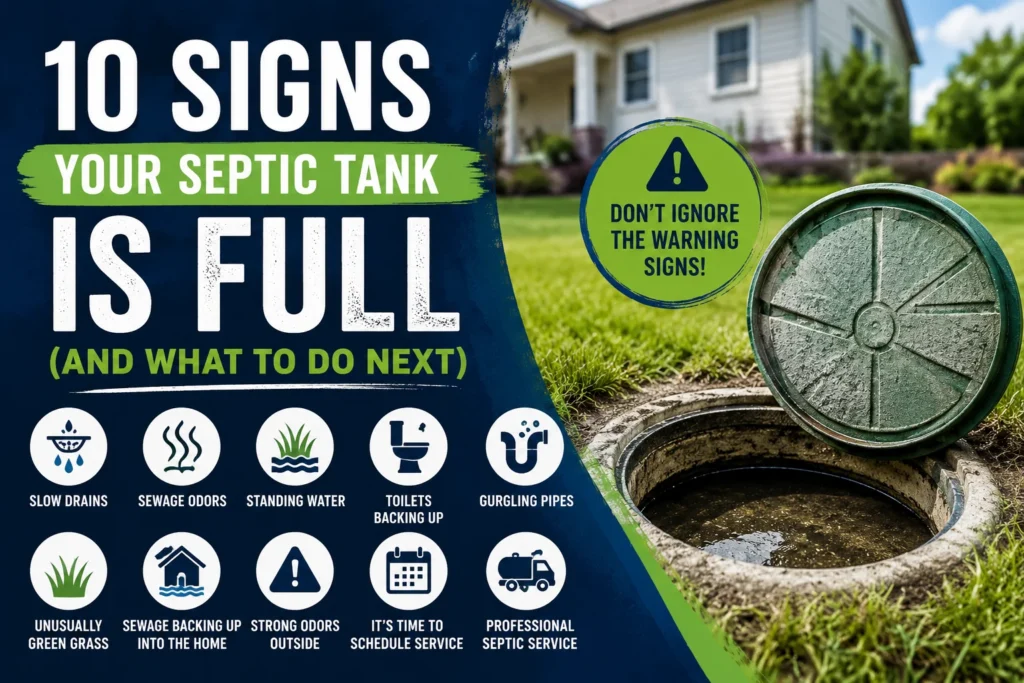
If you’re noticing slow drains, sewage odors, standing water in your yard, or recurring plumbing issues, these may be signs your septic tank is full. A full septic tank can quickly lead to backups, drain field damage, costly repairs, and unpleasant messes if left untreated.
Many homeowners don’t think about their septic system until something goes wrong. The good news is that most full septic tank symptoms give warning signs before a major failure occurs. Knowing how to tell if your septic tank is full can help you schedule service before the problem gets worse.
Below, we’ll cover the most common septic tank warning signs, what causes tanks to fill up, and what you should do if you suspect your system needs attention.
What Happens When a Septic Tank Gets Full?
Your septic tank is designed to separate solid waste from wastewater. Over time, solids accumulate inside the tank and must be removed through routine pumping.
When a septic tank reaches capacity:
- Waste has less room to separate properly
- Water moves through the system less efficiently
- Pressure increases throughout the septic system
- Backups and overflows become more likely
- The drain field can become overloaded
Eventually, neglecting routine pumping causes symptoms throughout your home’s plumbing and yard. What starts as a minor inconvenience can turn into a major septic repair if ignored.
The Most Common Signs Your Septic Tank Is Full
Slow Drains Throughout the House
One of the earliest signs septic tank is full is slow drainage throughout multiple fixtures.
You may notice:
- Bathroom sinks draining slowly
- Showers taking longer to empty
- Bathtubs holding water
- Kitchen sinks backing up
A single slow drain may indicate a localized clog. However, when several fixtures throughout the house begin draining slowly at the same time, your septic tank may be approaching capacity.
If something ain’t draining right throughout the home, it’s time to have your system inspected.
Sewage Odors Inside or Outside
A properly functioning septic system should not produce strong sewage smells.
Common odor locations include:
- Bathrooms
- Utility rooms
- Floor drains
- Areas around the septic tank
- The drain field
If you’re smelling sewage around your property in Rocktown, C-Town, or surrounding areas, waste may not be moving through the system properly.
Strong odors are one of the clearest full septic tank symptoms and should never be ignored.
Standing Water Near the Drain Field
Pooling water around your drain field often indicates your system is struggling to process wastewater.
Watch for:
- Wet spots in the yard
- Saturated soil
- Unexplained puddles
- Water collecting after normal household use
While heavy rain can sometimes contribute to wet areas, standing water combined with slow drains or odors often points to a septic issue.
Toilets Backing Up
Frequent toilet problems are among the most obvious septic tank overflow signs.
Common symptoms include:
- Repeated clogs
- Slow flushing
- Water rising higher than normal
- Multiple toilets having issues simultaneously
If plunging temporarily fixes the problem but it keeps returning, the issue may be in your septic system rather than the toilet itself.
Gurgling Pipes and Drains
Have you heard strange bubbling or gurgling sounds coming from your drains?
This often occurs when trapped air develops within the plumbing system due to restricted wastewater flow.
You may hear:
- Gurgling sinks
- Bubbling toilets
- Noises from shower drains
These sounds frequently appear before a more serious septic tank backing up situation develops.
Unusually Green Grass Above the Drain Field
A lush lawn is usually a good thing—but not always.
When wastewater begins leaking into the soil, it provides additional moisture and nutrients to grass above the drain field.
Look for:
- Bright green patches
- Faster-growing grass
- Isolated areas that look healthier than the surrounding lawn
This can be an early warning sign that wastewater is escaping where it shouldn’t.
Sewage Backing Up Into the Home
This is one of the most serious septic system problems homeowners can experience.
Signs include:
- Sewage coming up through drains
- Wastewater in tubs or showers
- Overflowing toilets
- Contaminated standing water indoors
At this point, immediate action is necessary.
If sewage is entering your home, contact a professional for Emergency Septic Service as soon as possible. Waiting can create health hazards and significantly increase cleanup costs.
Is a Full Septic Tank an Emergency?
Not every full tank is an emergency, but some situations require immediate service.
Call for emergency assistance if you notice:
- Sewage inside the home
- Wastewater backing up through drains
- Overflowing septic tanks
- Standing sewage water
- Strong sewage odors throughout the property
These symptoms often indicate that the system has exceeded its capacity or another serious issue is occurring.
If you’re dealing with active backups or wastewater exposure, don’t wait until the next day. Prompt action can help prevent extensive damage to your home and property.
How Long Can You Go With a Full Septic Tank?
The short answer: not very long.
Once septic tank warning signs appear, delaying service increases the risk of:
- Drain field damage
- Sewage backups
- Pipe blockages
- Property contamination
- Expensive repairs
Many homeowners hope the problem will go away on its own. Unfortunately, septic issues typically worsen over time.
What could have been resolved with routine Septic Tank Pumping may eventually require major repairs if ignored.
Don’t wait until a backup occurs.
What Causes Septic Tanks to Fill Up Faster?
Household Size
More people generate more wastewater.
A household with five or six occupants will typically fill a septic tank much faster than a household with one or two people.
Additional family members mean:
- More toilet flushing
- More laundry
- More showers
- More daily water usage
Excessive Water Usage
Even a properly sized system can become overloaded.
Common causes include:
- Long showers
- Multiple laundry loads per day
- Running dishwashers frequently
- Leaking faucets
- Running toilets
Reducing unnecessary water usage helps extend the life of your septic system.
Garbage Disposal Use
Garbage disposals send additional food waste into the septic tank.
This increases solid accumulation and can cause tanks to reach capacity sooner.
While occasional use is generally acceptable, excessive use often shortens pumping intervals.
Missed Pumping Schedule
This is the most common cause of a full septic tank.
Many homeowners simply don’t remember when their tank was last serviced.
Routine Septic Maintenance helps prevent unexpected problems and ensures your system continues operating efficiently year after year.
How Georgia Weather Can Affect Septic Systems
Georgia’s climate can create unique challenges for septic systems.
Heavy rain is one of the biggest concerns.
After significant storms, saturated soil can make it difficult for drain fields to absorb wastewater effectively. This can lead to:
- Slow drains
- Wet yards
- Standing water
- Increased system pressure
Clay-heavy soil found throughout portions of Metro East Atlanta can also contribute to drainage challenges.
Whether you’re near Olde Town Conyers, Downtown Covington Square, or up the road around The Ville, seasonal weather can impact septic performance.
After heavy rain, homeowners may notice symptoms that resemble a full septic tank even when the tank itself isn’t completely full. A professional inspection can determine the true cause.
How Often Should You Pump Your Septic Tank?
Most septic tanks should be pumped every 3 to 5 years.
However, the ideal schedule depends on:
- Household size
- Water usage habits
- Tank size
- Garbage disposal usage
- System age
Some households may require more frequent pumping.
Staying on schedule is one of the easiest ways to avoid costly septic system problems.
For a more detailed breakdown, read How Often Should You Pump a Septic Tank in Georgia?
What To Do If Your Septic Tank Is Full
Step 1: Reduce Water Usage
Minimize showers, laundry, and dishwashing until the issue is addressed.
Reducing water entering the system can help prevent further overload.
Step 2: Avoid Excessive Flushing
Only flush when necessary.
Avoid introducing additional wastewater into an already stressed system.
Step 3: Stay Away From Standing Sewage
If wastewater is visible in your yard or home, avoid contact whenever possible.
Sewage contains harmful bacteria and contaminants.
Step 4: Schedule Professional Septic Service
A trained technician can determine whether the issue requires pumping, repairs, or further inspection.
In some cases, a simple pumping appointment resolves the problem. In others, additional Septic System Repair may be necessary to restore proper function.
How Much Does Septic Tank Pumping Cost?
The cost of septic pumping varies depending on several factors.
Common pricing considerations include:
- Tank size
- Accessibility
- Waste volume
- System condition
- Location
While prices vary, routine pumping is almost always less expensive than repairing a damaged drain field or addressing a major backup.
Regular maintenance protects your investment and helps avoid emergency expenses later.
Homeowners throughout Conyers, Douglasville, Newnan, Eatonton, Griffin, and Greensboro often find that preventative service is the most cost-effective approach.
Signs Your Septic Tank Is Full FAQs
What are signs my septic tank is full?
Common signs include slow drains, sewage odors, standing water, gurgling pipes, toilet backups, and wastewater entering the home.
How long can I wait before pumping a full septic tank?
You should schedule service as soon as symptoms appear. Waiting increases the likelihood of backups and expensive repairs.
Can a full septic tank damage my drain field?
Yes. Continued use of a full tank can overload the drain field and potentially cause long-term damage.
Why does my yard smell like sewage?
Sewage odors often indicate that wastewater is not moving through the septic system properly and may signal a full tank or system failure.
What causes septic backups?
Backups can result from full tanks, clogged pipes, damaged components, saturated drain fields, or excessive water usage.
Can heavy rain make septic problems worse?
Yes. Heavy rainfall can saturate soil and reduce the drain field’s ability to absorb wastewater.
How much does septic pumping cost?
Costs vary depending on tank size, accessibility, and local service factors. Routine pumping is generally far less expensive than major repairs.
Is a full septic tank dangerous?
It can be. Sewage exposure creates health risks and may contaminate your property if not addressed quickly.
Can slow drains mean my septic tank needs pumping?
Yes. When multiple drains throughout the home are slow, a full tank may be the cause.
How can I prevent septic problems?
Routine pumping, water conservation, regular inspections, and ongoing maintenance are the best ways to keep your system healthy.
Schedule Septic Tank Pumping Before Problems Get Worse
If you’re experiencing signs your septic tank is full, don’t wait for a backup to occur. Fast action can prevent costly repairs, protect your drain field, and keep your household running smoothly.
Advance Septic Solutions provides fast, local septic service for homeowners throughout Conyers, Covington, and surrounding areas. Whether you need routine pumping, repairs, inspections, or emergency assistance, we’ve got you covered.
Call now for a free estimate. Same-day service may be available, and emergency service options are available when urgent septic problems can’t wait.
Give us a call today—let’s get you taken care of.